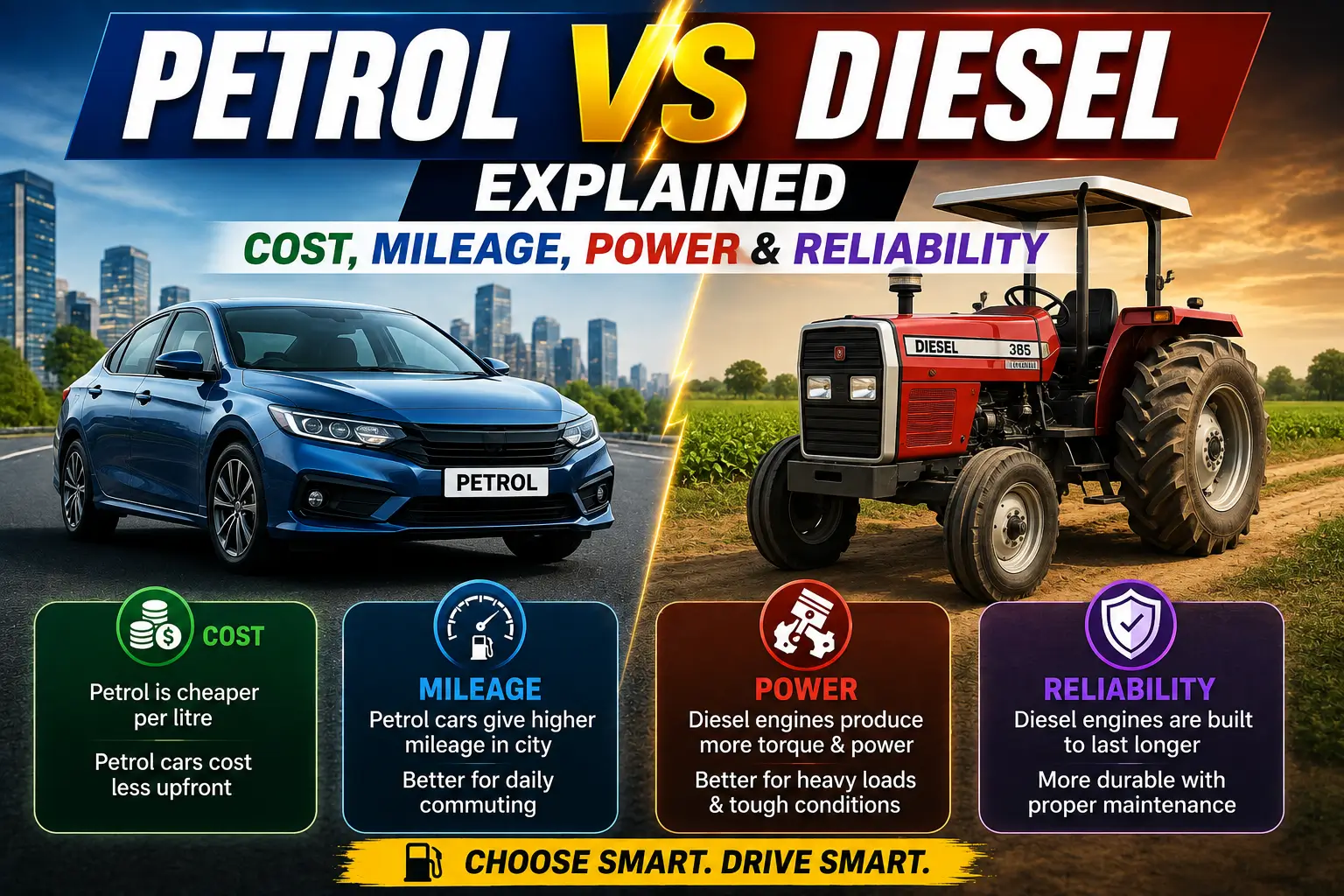
Both fuels come from the same barrel of crude, yet they behave completely differently once they hit an engine. Here’s a full breakdown of what you actually pay, what you actually get, how the two engines are built differently, and which one makes sense for your vehicle and driving habits.
◆ ◆ ◆
Every Pakistani driver eventually asks the same question at some point — can he like petrol better hai ya diesel? The honest answer is that neither fuel is universally “better.” They’re built for different jobs, priced differently, taxed differently, and wear differently over the life of a vehicle. This guide walks through every angle that actually matters before you decide, from the price board outside your local pump to what happens inside the engine block.
◆ ◆ ◆
Cost per litre vs. cost per kilometre
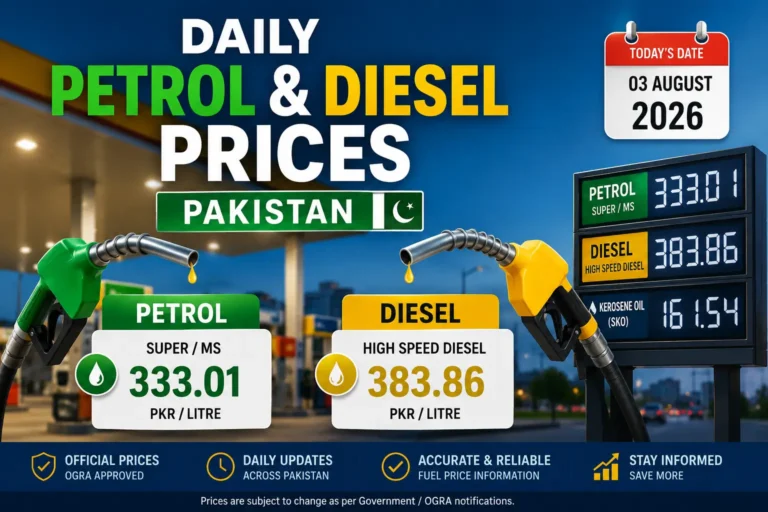
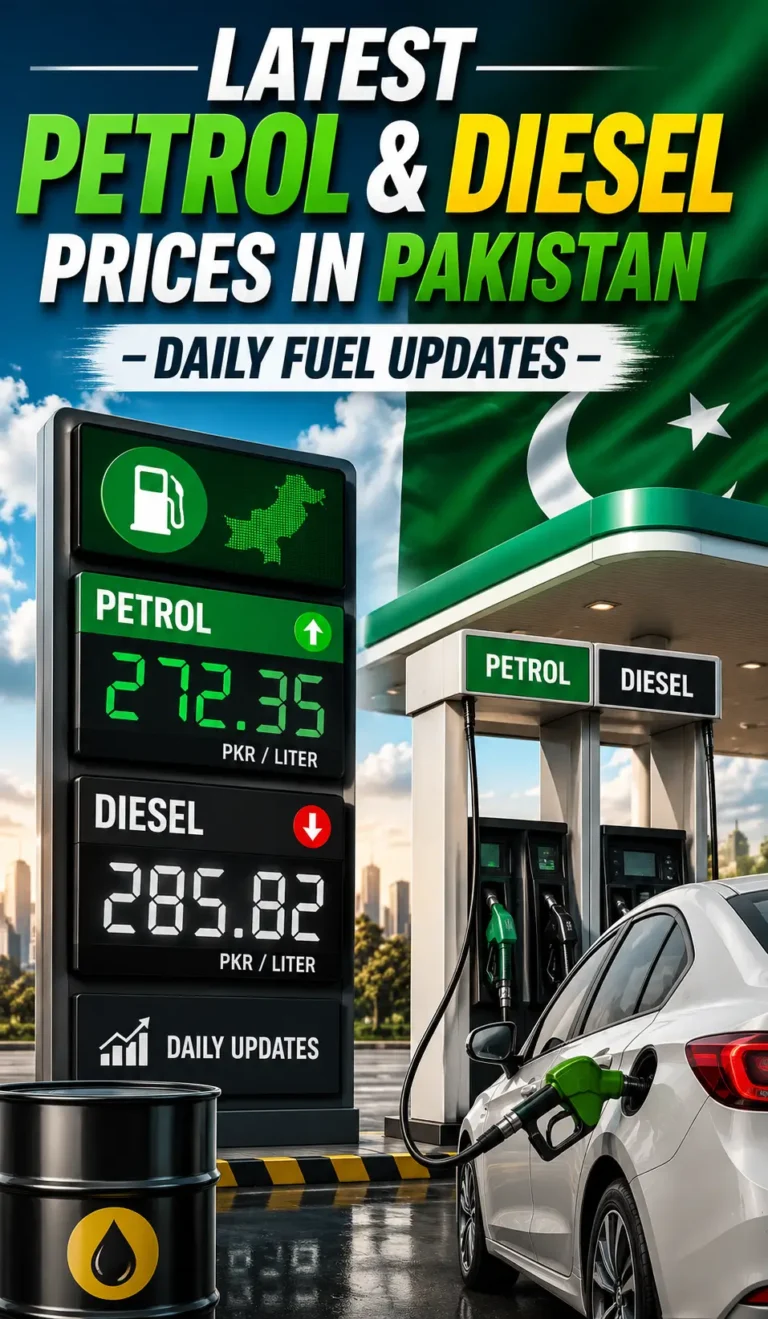
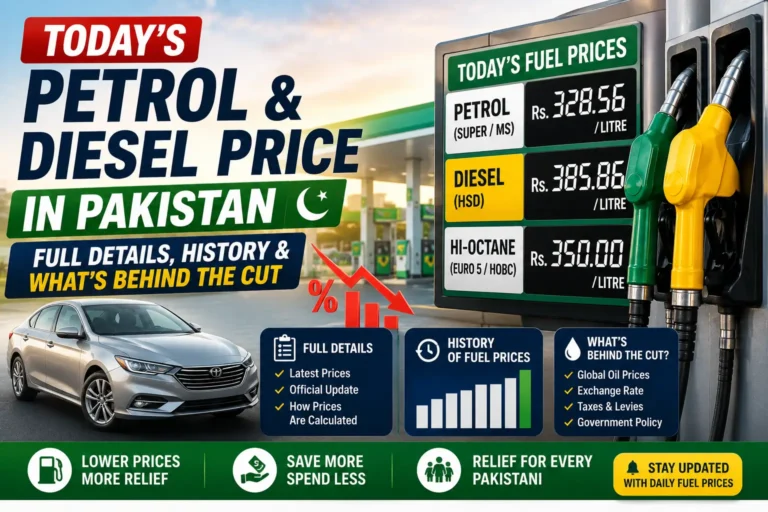
Diesel is almost always the more expensive fuel at the pump in Pakistan — currently around Rs. 58 more per litre than petrol. On the surface that looks like diesel is simply the pricier choice. But cost per litre is the wrong number to compare vehicles on. What actually matters to your monthly budget is cost per kilometre, and that’s where diesel starts closing the gap.
| METRIC | PETROL | DIESEL |
|---|---|---|
| Price per litre | Rs. 325.43 | Rs. 383.95 |
| Typical mileage (sedan/SUV) |
10–14 km/L | 14–20 km/L |
| Approx. cost per km | Rs. 25–32 | Rs. 19–27 |
| Best for | Short daily commutes, city driving | Long distances, heavy loads, highway |
Notice the overlap in the cost-per-km range — this is the real-world nuance most comparison charts skip. A petrol car driven gently on the highway can beat a diesel car driven aggressively in stop-start city traffic. Fuel type sets the ceiling and floor; driving style decides where you actually land within it.
What this looks like over a year
Take a commuter covering 15,000 km a year. At the numbers above, that’s roughly Rs. 4,20,000 in petrol versus Rs. 3,50,000–4,00,000 in diesel — a modest annual saving that only shows up once mileage is genuinely high. Below around 10,000–12,000 km a year, the math rarely favours diesel once other costs are factored in.
Also Read: https://petrolpricepakistan.online/petrol-and-diesel-price-in-pakistan/
◆ ◆ ◆
Mileage: why diesel goes further on the same tank
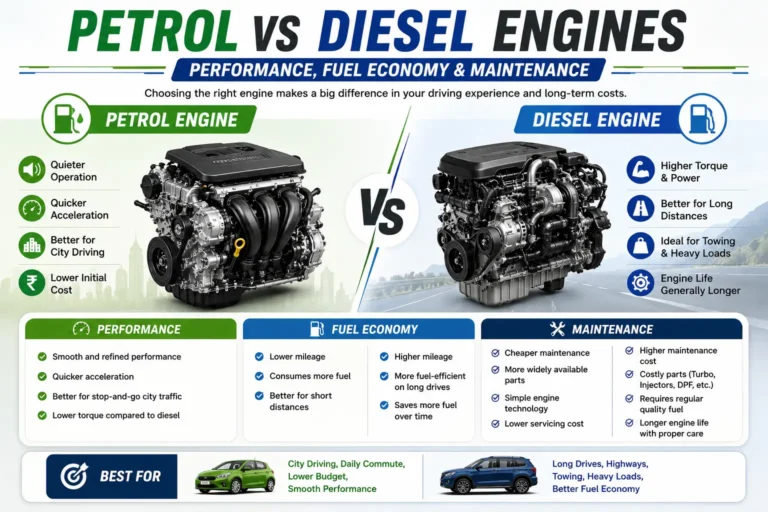
Diesel engines use compression ignition rather than a spark plug — air is compressed until it’s hot enough to ignite the fuel on its own, with no spark required. Diesel fuel itself also carries roughly 10–15% more energy per litre than petrol. Combined with the typically higher compression ratios diesel engines run, this is why a diesel vehicle covers noticeably more distance per litre than its petrol equivalent, especially on the highway where the engine runs at a steady, efficient load rather than constantly accelerating and braking.
Petrol engines, by contrast, lose more efficiency in stop-and-start city traffic — which is exactly where most everyday commuting in Pakistan happens. This is a key reason many petrol-car owners never actually see the mileage figures quoted for a vehicle: highway-rated numbers assume steady cruising speeds that city driving rarely allows.
Turbo-diesel vs naturally aspirated petrol
Modern turbo-diesel engines add forced induction on top of the compression-ignition advantage, pushing mileage and torque even higher without a major mileage penalty — this is common in imported SUVs and pickups in Pakistan. Naturally aspirated petrol engines, common in the local 1000cc–1300cc segment, trade some of that efficiency for a simpler, cheaper-to-maintain design.
◆ ◆ ◆
Power and driving feel
Petrol: Revvs higher, delivers power smoothly across the rev range, feels quicker and more responsive for everyday acceleration and overtaking in a car. This is why petrol is the near-universal choice for hatchbacks and family sedans built for city use.
Diesel: Produces higher torque at low RPM, which means stronger pulling power for towing, hauling, and climbing — this is why virtually all trucks, tractors and large SUVs run on diesel. A diesel engine doesn’t need to be revved hard to feel strong; the pulling power is available almost from idle.
Refinement: Petrol engines are generally quieter and smoother-running, with less vibration at idle. Diesel engines have historically been noisier and rougher, though modern common-rail diesel technology has narrowed this gap significantly in newer vehicles.
Verdict: Petrol wins on responsiveness, refinement, and everyday drivability; diesel wins on raw pulling power and load-carrying ability.
◆ ◆ ◆
Reliability and maintenance
| FACTOR | PETROL | DIESEL |
|---|---|---|
| Engine build | Lighter, simpler | Heavier, built for higher compression |
| Typical engine lifespan | Good, moderate durability | Often longer with proper maintenance |
| Service cost per visit | Generally lower | Higher — injectors, filters more expensive |
| Parts & mechanic availability | Widely available across | Good for trucks/SUVs, thinner for diesel cars |
| Cold-weather starting | Easier | Can be harder in very cold conditions |
| Fuel quality sensitivity | Fairly tolerant | Sensitive to contaminated or adulterated fuel |
Diesel engines are built tougher and often outlast petrol engines under heavy, continuous use — this is exactly why commercial fleets, tractors, and long-haul trucks are almost universally diesel. But that toughness comes with higher parts and diesel-injection systems (especially common-rail setups) are noticeably more sensitive to poor fuel quality than a petrol engine is. In areas where fuel adulteration is a known risk, this sensitivity matters more than the spec sheet suggests.
For diesel passenger cars specifically — as opposed to diesel trucks and tractors, which are serviced everywhere — the pool of specialist mechanics and readily available spare parts is noticeably smaller in Pakistan, which can mean longer wait times and higher labour costs for repairs.
◆ ◆ ◆
Total cost of ownership over five years
Sticker price and fuel price are only part of the picture. A fair comparison has to include purchase price, insurance, servicing, and resale value together.
| Ownership factor | Petrol | Diesel |
|---|---|---|
| Upfront vehicle price | Usually lower | Often Rs. 3–5 lac higher for equivalent trim |
| Annual fuel cost (high commuter) | Higher for city driving | Lower at high mileage |
| Routine servicing (5 years) | Lower overall | Higher diesel + high-spec filters |
| Major repair risk | Lower | Costlier if it hits (fuel pump, injectors) |
| Resale liquidity | Larger buyer pool | Smaller, more specialised buyer pool |
In practical terms: a diesel vehicle tends to make financial sense only when annual mileage is genuinely high — think transport businesses, frequent inter-city travel, or agricultural use — where the fuel savings have enough distance to actually offset the higher purchase price and servicing bills. For an average urban commuter doing modest daily distances, petrol usually wins on total cost of ownership despite the higher per-litre diesel efficiency.
◆ ◆ ◆
Emissions and environmental impact
Diesel engines emit less CO2 per kilometre than petrol engines of similar output, thanks to their higher efficiency — this is one reason diesel was pushed heavily in parts of the world for years as the “greener” choice. However, diesel combustion produces more nitrogen oxides (NOx) and particulate matter, which are more directly linked to urban air quality and respiratory health issues, especially in dense, high-traffic cities.
Petrol engines produce more CO2 per litre burned but significantly less particulate matter and NOx. In a Pakistani urban context — where air quality in cities like Lahore is a serious, well-documented concern — the particular output of older or poorly maintained diesel vehicles is a real factor worth weighing alongside cost.
◆ ◆ ◆
Common myths, checked
◆ ◆ ◆
Which one should you actually choose?
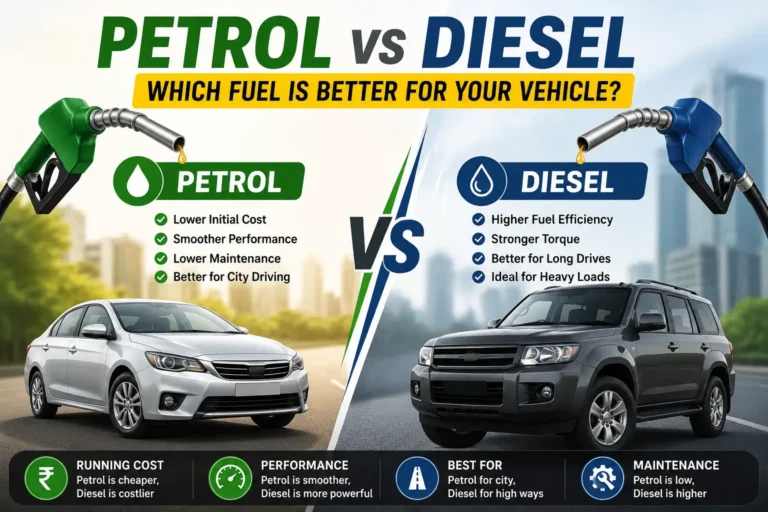
Daily city commuter, low annual mileage: Petrol — lower upfront vehicle cost and cheaper, easier servicing outweigh diesel’s efficiency edge at low mileage.
High annual mileage, highway-heavy driving: Diesel — better cost-per-km adds up fast over long distances, and the purchase-price premium gets paid back sooner.
Towing, hauling, or commercial use: Diesel — the torque advantage is decisive for trucks, tractors, and loaded SUVs, and diesel commercial infrastructure is everywhere.
Small-capacity bike or car (under 1300cc): Petrol — this segment is built and tuned for it; Pakistan diesel options are rare below this size.
Frequent inter-city travel or family SUV: Diesel — sustained highway cruising is exactly where diesel efficiency and torque both shine.
A quick pre-purchase checklist
Estimate your realistic annual kilometres — not the ideal, the actual.
Check local mechanic and spare-part availability for the specific diesel model, not just diesel in general.
Factor in the higher upfront price of diesel trims against your expected ownership period.
If buying used, ask specifically about injector and fuel-pump service history on diesel vehicles.
Match engine size to actual need — don’t pay for Hi-Octane or diesel capability you’re unlikely to ever use.
◆ ◆ ◆