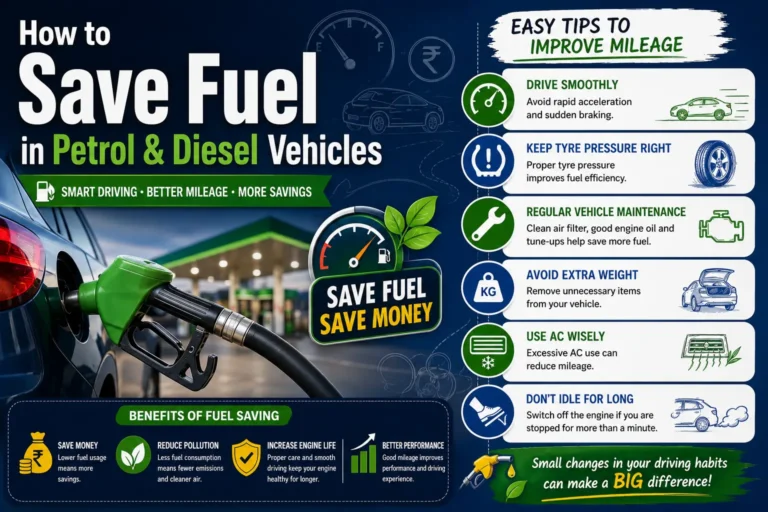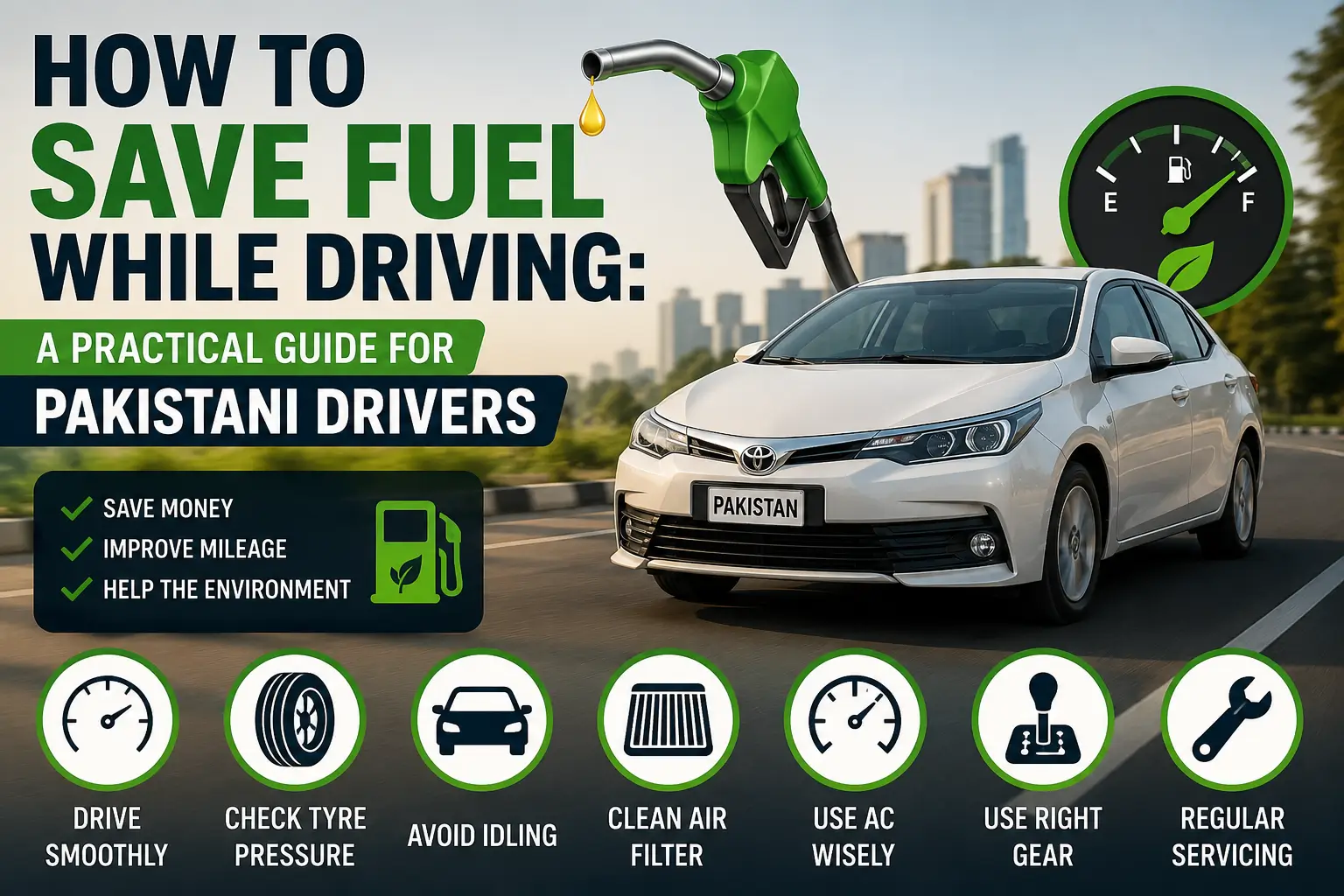
How to Save Fuel While Driving: A Practical Guide for Pakistani Drivers
Petrol and diesel prices in Pakistan keep climbing, and every rupee saved at the pump matters. How to Save Fuel Here’s a complete, no-nonsense look at what actually cuts fuel consumption — and what’s just a myth.
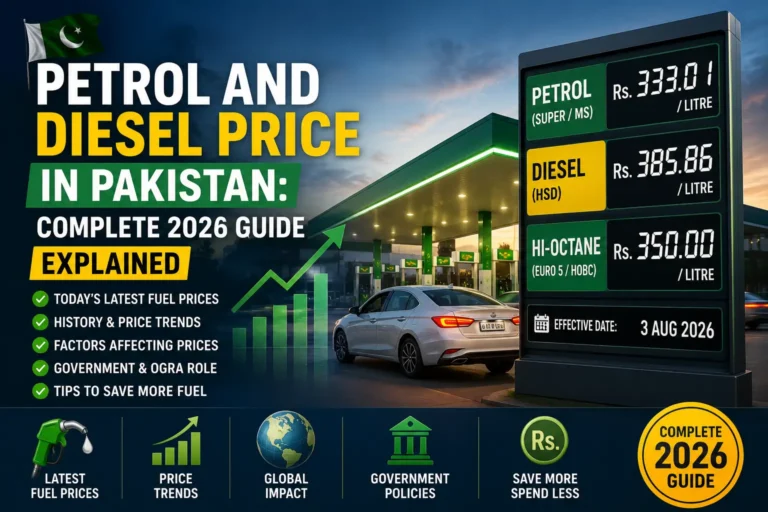
(OCTANE EURO 5)
DIESEL
5
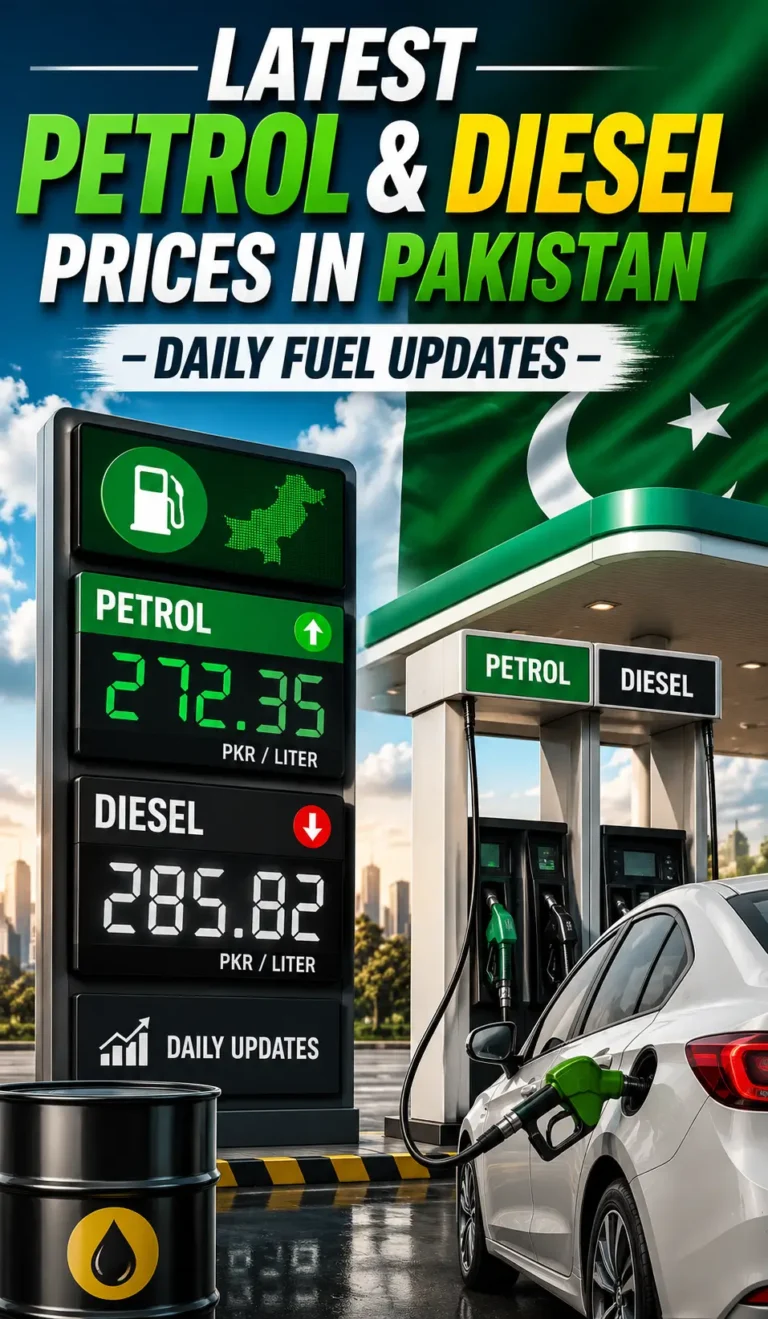
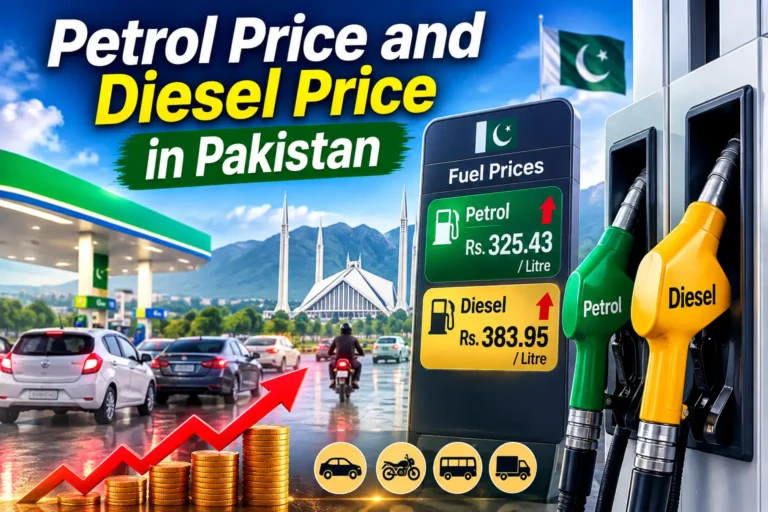
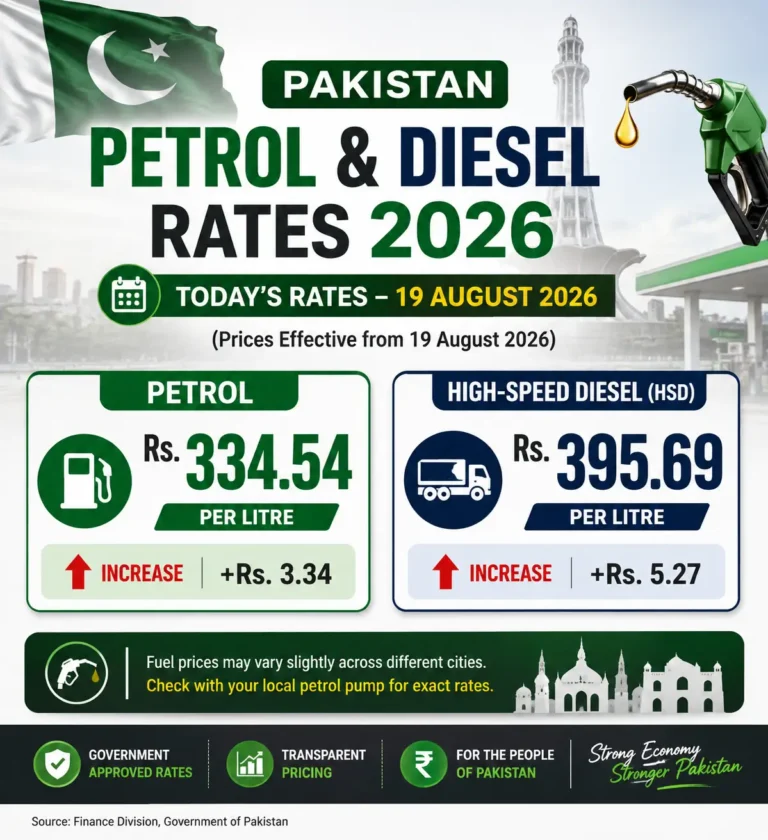
Prices effective from late July 2026, based on official OGRA-notified rates published by PSO. Diesel is roughly Rs. 40/litre costlier than petrol, and Gilgit runs about Rs. 6/litre higher than the rest of the country due to transport costs. Rates change roughly every two weeks, How to Save Fuel so always confirm the current price with your local pump or an official source before budgeting a long trip.
Fuel is one of the biggest recurring costs for anyone who drives in Pakistan, whether it’s a daily office commute in Lahore, a delivery route in Karachi, or a family trip up to the north. With petrol sitting around Rs. 350 a litre and diesel even higher, small habits at the wheel translate into real money over a month. The good news is that most of the biggest fuel-wasters have nothing to do with your car’s age or engine size — they come down to how you drive, how you maintain the vehicle, and how you plan your trips. Below is a practical, myth-busting breakdown of what genuinely saves fuel, based on how engines, tyres, and traffic actually behave.
Every driver has heard some version of these tips — from a mechanic, a relative, or a WhatsApp forward — but not all of them hold up equally well once you look at how an engine actually consumes fuel. Some habits, like smooth acceleration, make a large and immediate difference. Others, like carrying a bit of extra weight, matter far less than people assume. This guide separates the two, so you can spend your effort on the changes that actually move the needle on your monthly fuel bill, rather than obsessing over ones that don’t.
1. How to Save Fuel Drive Smoothly — The Single Easiest Win
If there is one habit that beats every other tip on this list, it’s smooth driving. Hard acceleration forces the engine to burn extra fuel to build speed quickly, and hard braking throws away the kinetic energy you just paid for. How to Save Fuel Every time you stomp the accelerator from a red light and then brake hard for the next one, you are effectively converting fuel into heat in your brake pads instead of forward motion.
Maintaining a steady, moderate speed — accelerating gently, coasting toward stops instead of braking late, and anticipating traffic signals — is consistently shown to be one of the most effective and easiest ways to improve real-world fuel economy. This single change can improve mileage noticeably without spending a single rupee on the car itself.
Rule of thumb: if you can feel your body pushed back into the seat under acceleration, or jerked forward under braking, you’re burning more fuel than you need to.
2. Tyre Pressure Really Does Affect Fuel Consumption
Underinflated tyres are one of the most overlooked fuel-wasters on Pakistani roads, partly because low pressure doesn’t always look dramatic. When a tyre runs below its recommended pressure, more of its surface flattens against the road, increasing rolling resistance. How to Save Fuel The engine then has to work harder to maintain the same speed, which burns more fuel and wears the tyre out faster along its edges.
Checking tyre pressure once a month, and always before a long highway drive, is a two-minute habit that pays for itself. Use the pressure figure printed on the sticker inside the driver’s door or in the owner’s manual — not the number embossed on the tyre sidewall, which is the tyre’s maximum rating, not the recommended one for your car.
3. Idling in Traffic: Should You Switch the Engine Off?
Karachi’s signals, Lahore’s underpasses, and Islamabad’s rush-hour jams all mean Pakistani drivers spend a meaningful chunk of their week sitting still with the engine running. A modern engine idling for more than roughly 10 seconds burns more fuel than restarting it would, How to Save Fuel since idling produces zero kilometres travelled for continuous fuel use. If you expect to be stationary for a minute or longer — a long red light, a level crossing, or a stalled queue — switching off the engine and restarting when traffic moves is generally the more fuel-efficient choice for most modern fuel-injected cars.
The exception is very short stops of just a few seconds, where the fuel used to restart the engine can outweigh the small idling saving. As a practical rule for city driving in Pakistan: if the wait looks longer than 30–60 seconds, switch off.
4. How Much Does Air Conditioning Really Cost You?
Running the AC does increase fuel consumption, because the compressor draws mechanical power directly from the engine. On the highway, this effect is usually modest — often in the low single-digit percentage range — because aerodynamic drag from open windows at high speed can actually cost more than the AC itself. How to Save Fuel In city driving at low speed, however, the AC’s relative impact on fuel use is larger, since the engine is already working in a less efficient low-speed range.
In Pakistan’s summer heat, turning the AC off entirely usually isn’t realistic or safe, but a few habits help: park in shade so the cabin doesn’t overheat before you start, vent the hot air out through open windows for the first few seconds before switching the AC on, and get the system serviced regularly,How to Save Fuel since a poorly maintained compressor or a low refrigerant charge makes the AC work harder for the same cooling.
Also Read: https://petrolpricepakistan.online/select-how-to-save-fuel/
5. Does Extra Weight in the Car Impact Mileage?
Yes — every extra kilogram the engine has to move costs a small amount of fuel, and the effect compounds over the life of the vehicle if you habitually carry unnecessary weight. Roof boxes, tool kits left in the boot from a home renovation, unused car seats, or a trunk full of water bottles and spare parts all add up. The effect per single kilogram is small, but a boot full of unnecessary items, or a permanently mounted roof rack that also adds wind drag,How to Save Fuel can measurably reduce mileage over months of driving.
A simple monthly habit — clearing out anything from the boot that isn’t needed for that day’s trip — costs nothing and adds up over a year of driving.
6. Air Filters and Fuel Efficiency
A clogged air filter restricts the amount of clean air reaching the engine, which throws off the air-to-fuel ratio the engine is tuned for and can force it to run richer than necessary, wasting fuel and reducing power.How to Save Fuel Pakistan’s dusty city air and unpaved stretches on intercity routes make air filters clog faster here than in cleaner-air countries.
Most manufacturers recommend checking the air filter every 8,000–10,000 km and replacing it roughly every 15,000–20,000 km, but if you drive frequently on dusty roads, unpaved shortcuts, or during construction season, it’s worth checking it more often — a quick visual check at every oil change is a good habit.
7. How to Save Fuel Affect Fuel Consumption Significantly?
Speed has one of the largest single effects on fuel economy of anything on this list. Aerodynamic drag increases roughly with the square of speed, How to Save Fuel meaning that going from 100 km/h to 120 km/h doesn’t cost 20% more fuel — it typically costs considerably more, because the engine is fighting exponentially higher air resistance. Most petrol engines hit their most fuel-efficient cruising range somewhere between 80 and 100 km/h on a flat highway; above that, efficiency drops off quickly.
On Pakistan’s motorways, where posted limits often sit around 120 km/h, sticking closer to 100–110 km/h rather than pushing the upper limit can noticeably stretch a tank of fuel on a long trip between cities, in addition to being safer.
8. Can Combining Errands Into One Trip Really Save Fuel?
Yes, and this is one of the most underrated fuel-saving habits. A cold engine runs less efficiently for the first few kilometres because it hasn’t reached its optimal operating temperature yet, and short, separate trips mean the engine is frequently starting cold. Combining several short errands — the bank, the grocery store, dropping off the kids — into a single planned loop means the engine warms up once and stays efficient for the rest of the trip,How to Save Fuel instead of restarting cold multiple times a day.
Planning the order of stops to avoid backtracking, and choosing routes that avoid known traffic bottlenecks, adds up over weeks of driving far more than most people expect.9. A Few More Habits Worth Adopting
Shift gears sensibly (manual transmissions)
Shifting up as early as comfortably possible, and avoiding high revs before changing gear,How to Save Fuel keeps the engine in its efficient range rather than forcing it to work harder than necessary at high RPM.
Keep up with regular servicing
Old spark plugs, dirty fuel injectors, worn oxygen sensors, and low engine oil all quietly reduce efficiency. How to Save Fuel Sticking to the manufacturer’s service schedule keeps the engine running as it was designed to.
Remove roof racks and boxes when not in use
Beyond the weight, a roof box or rack adds noticeable aerodynamic drag at highway speed. Taking it off when it isn’t needed helps both in the city and on the motorway.
How to Save Fuel Plan around traffic, not just distance
A slightly longer route that avoids a known traffic signal cluster or an under-construction stretch can use less fuel overall than the “shortest” route on the map, How to Save Fuel because it avoids repeated stop-start driving.
10. Cold Starts and Short City Trips
An engine that has just started is running in a deliberately richer fuel mixture until it reaches its normal operating temperature, which typically takes a few minutes of driving. During that warm-up window, fuel economy is noticeably worse than once the engine has settled in. This matters a lot in Pakistani cities, where a huge share of daily driving consists of short hops — to the corner shop, to drop off a child a few streets away, to a nearby relative’s house — each one starting the engine cold all over again.
The fix isn’t to avoid short trips altogether, but to be deliberate about grouping them, as covered above, How to Save Fuel and to avoid unnecessary idling immediately after starting the car. Modern fuel-injected engines don’t need a long stationary warm-up; driving off gently within the first 30–60 seconds warms the engine faster and more efficiently than letting it idle in the driveway.
11. Choosing the Right Route, Not Just the Shortest One
Navigation apps default to the shortest or fastest route by distance and current traffic, but the most fuel-efficient route isn’t always the same thing. A route with fewer traffic signals, fewer speed-breakers, and a steadier flow of traffic can use noticeably less fuel than a shorter route that involves constant stopping and How to Save Fuel starting, even if it takes a similar amount of time. This is especially relevant on daily commutes, where the route is fixed and repeated hundreds of times a year — it’s worth testing two or three alternatives over a couple of weeks and comparing how the tank empties, rather than assuming the officially “fastest” option is also the cheapest to drive.
Why This Matters More in 2026
With petrol above Rs. 350 a litre and diesel close to Rs. 390 a litre, fuel now makes up a much larger share of the average household and transport budget than it did just a few years ago. None of the habits above require spending money on the car — they’re free changes in behaviour and light maintenance that, How to Save Fuel combined, can meaningfully reduce a monthly fuel bill. Prices are revised roughly every fortnight by OGRA and reflected by major marketing companies, so it’s worth checking the current rate before a long trip rather than budgeting off memory.