What Causes Petrol & Diesel Prices to Rise or Fall?
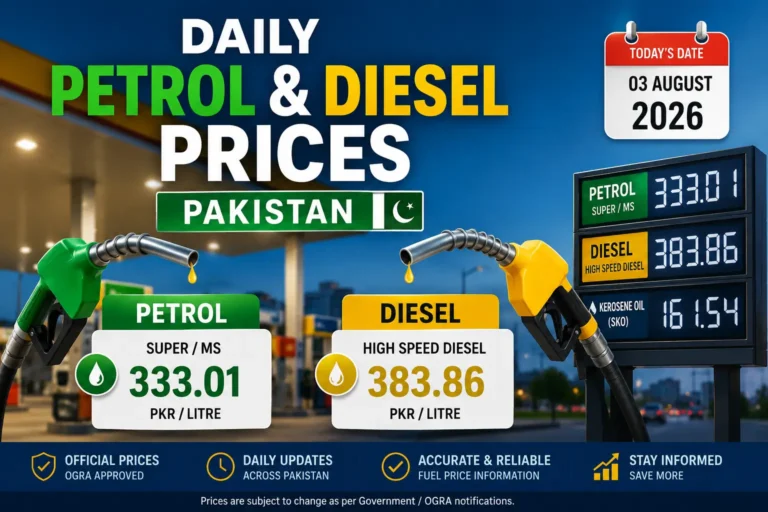
Every fortnight, millions of people in Pakistan check the news anxiously, waiting to hear whether petrol and diesel prices will go up or come down. For a country where fuel touches everything — from the fare of a rickshaw to the price of vegetables in the local market — even a small change of a few rupees per litre can ripple through the entire economy. But have you ever wondered what actually decides these prices? Why does petrol sometimes jump by Rs. 20 in a single review, while at other times it barely moves by a few paisas?
The truth is that petrol and diesel prices are not set randomly. They are the result of a complex mix of global and local factors — from the price of crude oil traded in international markets, to the value of the Pakistani rupee against the US dollar, to the taxes and levies imposed by the government. In this article, we break down, in simple terms, exactly what causes fuel prices to rise or fall, and why Pakistan’s fuel prices often behave differently from what you’d expect just by looking at international oil rates.
What Causes Petrol & Diesel International Crude Oil Prices
The single biggest factor behind petrol and diesel prices is the price of crude oil in the international market. Pakistan imports the vast majority of its petroleum needs, so whatever happens to global crude oil benchmarks — such as Brent Crude and West Texas Intermediate (WTI) — has a direct impact on local pump prices.
Crude oil prices themselves are driven by global supply and demand. When oil-producing countries increase production, prices tend to fall because there is more oil What Causes Petrol & Diesel available than the market needs. When production is cut — for example, by decisions from OPEC (the Organization of the Petroleum Exporting What Causes Petrol & Diesel Countries) and its allies, often called OPEC+ — prices usually rise because supply becomes tighter relative to demand.
Global demand also swings with the health of the world economy. When major economies like the United States, China, and the European Union are growing strongly, industrial activity and travel increase, pushing oil demand — and prices — higher. During slowdowns or recessions, demand drops and prices tend to soften.
Geopolitical Events and Conflicts
Oil markets are extremely sensitive to political instability, especially in regions that produce large volumes of crude — such as the Middle East, Russia, and parts of Africa. Wars,What Causes Petrol & Diesel sanctions, pipeline disruptions, tanker attacks, or even the threat of conflict can cause prices to spike within days, sometimes hours.
Sanctions on major oil-exporting countries can remove large volumes of supply from the market overnight, while attacks on oil infrastructure or shipping routes (such as the Strait of Hormuz, through which a large share of the world’s oil passes) create fear of shortages. This fear alone is often enough to send prices climbing, even if actual supply hasn’t been disrupted yet.
The Pakistani Rupee’s Value Against the US Dollar
Crude oil is traded internationally in US dollars. This means that even if global oil prices remain unchanged, What Causes Petrol & Diesel a weaker Pakistani rupee makes imported fuel more expensive in rupee terms, while a stronger rupee can help offset rising international prices.
This is why you sometimes see petrol prices in Pakistan rise even when international crude oil prices are falling — the rupee’s depreciation against the dollar can outweigh the benefit of cheaper global oil. Similarly,What Causes Petrol & Diesel a stable or strengthening rupee can help cushion the impact of rising international prices, or even allow for a price cut.
Government Taxes, Levies, and Duties
A significant portion of what consumers pay at the pump in Pakistan has nothing to do with the actual cost of the fuel itself — it goes toward government taxes and levies. The two major components are:
These levies are a major source of revenue for the government and are often adjusted to help meet budgetary targets or commitments made under IMF (International Monetary Fund) programs. When the government raises the petroleum levy, What Causes Petrol & Diesel prices go up even if there has been no real change in international oil prices.
Sample Price Breakdown: Where Does Your Money Go?
| Component | Approx. Share of Pump Price |
|---|---|
| Ex-refinery / import cost of fuel | ~55–65% |
| Petroleum Levy | ~15–20% |
| General Sales Tax (where applicable) | Varies |
| OMC & dealer margins | ~5–7% |
| Freight & distribution costs | ~2–4% |
Note: These percentages are approximate and can shift with each fortnightly price review, depending on international rates, exchange rate movement, and government tax policy.
What Causes Petrol & Diesel and Local Production Capacity
Crude oil isn’t usable as petrol or diesel straight out of the ground — it needs to be refined. Pakistan has a mix of local refineries and imported refined products, and the cost of refining, What Causes Petrol & Diesel along with the capacity and efficiency of local refineries, plays a role in the final price.
When local refineries operate below capacity or face technical issues, the country has to rely more heavily on importing already-refined petrol and diesel, which usually costs more than processing crude domestically. Refining margins — the difference between the cost of crude oil and the price of refined fuel — also fluctuate globally and get passed on to consumers.
Freight, Transportation, and Distribution Costs
Once fuel is either refined locally or imported, it still needs to travel from ports and refineries to fuel stations across the country. This involves freight charges for shipping crude oil or refined products to Pakistan, inland transportation costs to move fuel to different cities, What Causes Petrol & Diesel and the margins earned by Oil Marketing Companies (OMCs) and dealers.
Any rise in global shipping costs, fuel used for transportation itself, or logistics disruptions can add to the final price that consumers pay.
OGRA and the What Causes Petrol & Diesel Mechanism
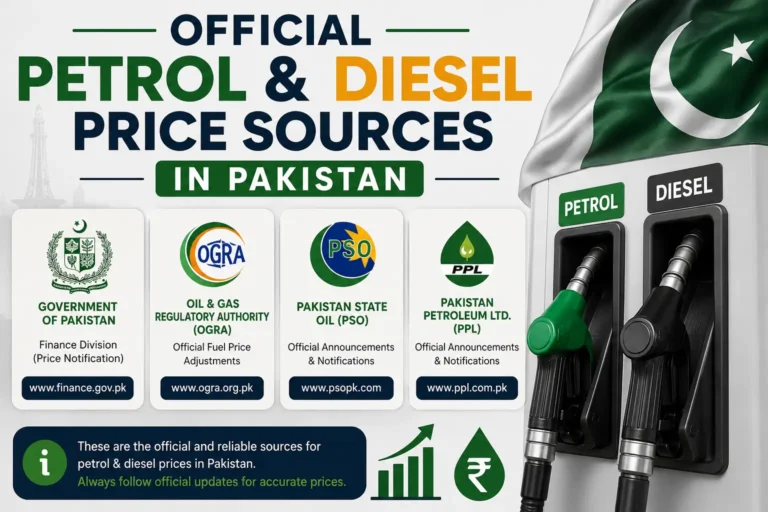
In Pakistan, petrol and diesel prices are reviewed and notified by the government, based on calculations submitted by the Oil and Gas Regulatory Authority (OGRA). This review typically happens every 15 days (fortnightly), though the government can announce changes What Causes Petrol & Diesel off-cycle during periods of sharp price movement.
OGRA’s pricing formula takes into account the international price of crude oil and refined products, the exchange rate, applicable taxes and levies, and OMC and dealer margins. The final decision on whether to fully pass on the calculated price change to consumers, or to partially absorb it, What Causes Petrol & Diesel ultimately rests with the federal government — which is why prices don’t always move by exactly the amount that international trends alone would suggest.
What Causes Petrol & Diesel and Regional Demand Patterns
Demand for fuel isn’t constant throughout the year. In many parts of the world, summer months see higher demand for petrol due to increased travel, while winter can increase demand for diesel and heating fuels. In Pakistan specifically, demand for diesel often rises during the harvest season, What Causes Petrol & Diesel as it’s heavily used for agricultural machinery, transport of crops, and irrigation tube wells.
Higher seasonal demand, both locally and globally, can put upward pressure on prices, while periods of lower demand can help ease them.
Global Inventory Levels and Strategic Reserves
Oil-consuming and producing nations maintain strategic petroleum reserves that can be released or built up depending on market conditions. When major economies release oil from their strategic reserves, it temporarily increases supply and can help bring prices down. Conversely, when countries choose to build up reserves — buying more oil than they immediately need — What Causes Petrol & Diesel it adds to demand and can push prices higher.
Weekly inventory reports, especially from the United States, are closely watched by traders and can cause short-term price swings even without any major geopolitical or economic news.
Speculation in Oil Futures Markets
Crude oil is heavily traded not just by companies that actually need physical oil, but also by financial investors and speculators through futures contracts. Expectations about future supply, demand,What Causes Petrol & Diesel interest rates, and the global economy can cause oil prices to move based on sentiment alone, sometimes disconnected from immediate physical supply and demand.
Also Read: https://petrolpricepakistan.online/
Quick Summary: Global vs. Local Price Factors
| Factor | Type | Effect on Price |
|---|---|---|
| International crude oil prices | Global | Rise or fall directly with global oil market trends |
| Geopolitical conflicts / sanctions | Global | Usually push prices up due to supply fears |
| OPEC+ production decisions | Global | Cuts raise prices; increased output lowers prices |
| Pakistani rupee vs. US dollar | Local | Weaker rupee raises prices; stronger rupee eases them |
| Petroleum Levy & GST | Local | Directly increases or decreases pump price |
| Refining & distribution costs | Local | Adds to final retail price |
| Seasonal demand (harvest, summer travel) | Local & Global | Higher demand can push prices upward |
Why Pakistan’s Fuel Prices Don’t Always Match Global Trends
Given all these factors, it’s easy to see why Pakistan’s petrol and diesel prices don’t move in perfect step with international crude oil prices. A drop in global oil prices might be offset by rupee depreciation or an increase in the petroleum levy, while a spike in global prices might be partially absorbed by the government to protect consumers, especially close to politically sensitive periods. This is why comparing Pakistan’s What Causes Petrol & Diesel fuel prices to international trends alone rarely tells the full story — local currency movement and government tax policy often play just as big a role as the global oil market itself.
Also Read:https://petrolpricepakistan.online/petrol-diesel-price-trends/
Conclusion
Petrol and diesel prices are shaped by a web of interconnected global and local factors — international crude oil prices, geopolitical events, the strength of the Pakistani rupee, government taxes and levies, refining and distribution costs, and the regulatory pricing mechanism overseen by OGRA. Understanding these factors can help consumers make sense of why prices change the way they do, and why fuel price reviews in Pakistan are watched so closely every fortnight.
Also Read: https://petrolpricepakistan.online/diesel-and-petrol-price/