Petrol Price and Diesel Price in Pakistan
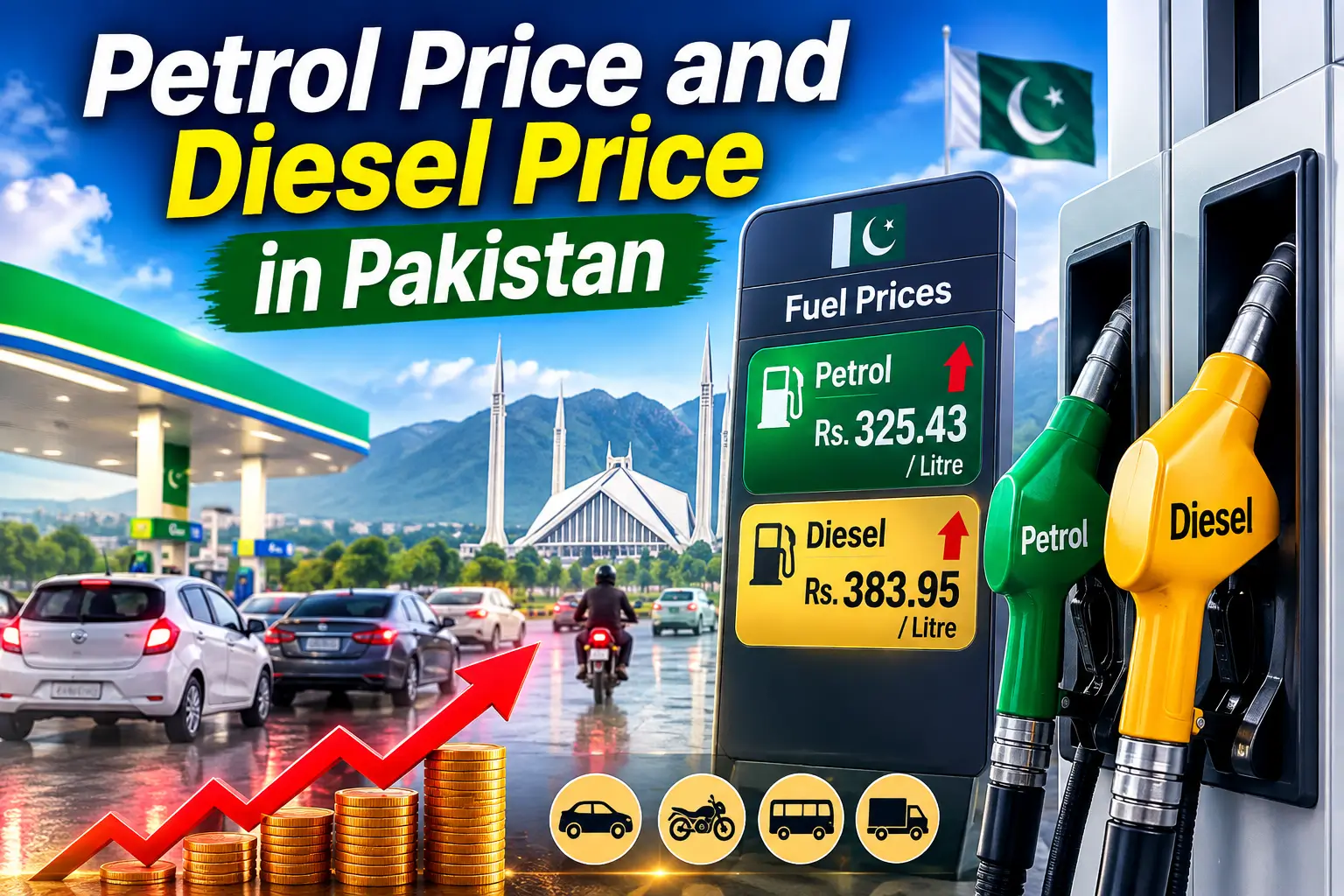
A litre of Petrol Price and Diesel Price now costs Rs. 325.43 and Diesel Rs. 383.95 — but the real story isn’t the price on the pump, it’s what that price does to a commuter’s monthly budget, a transporter’s fare chart, and a farmer’s cost of getting produce to market. Here’s a fresh look at what today’s fuel rates actually mean for ordinary life in Pakistan.
The Numbers
◆ ◆ ◆
What a Litre Actually Buys You Today
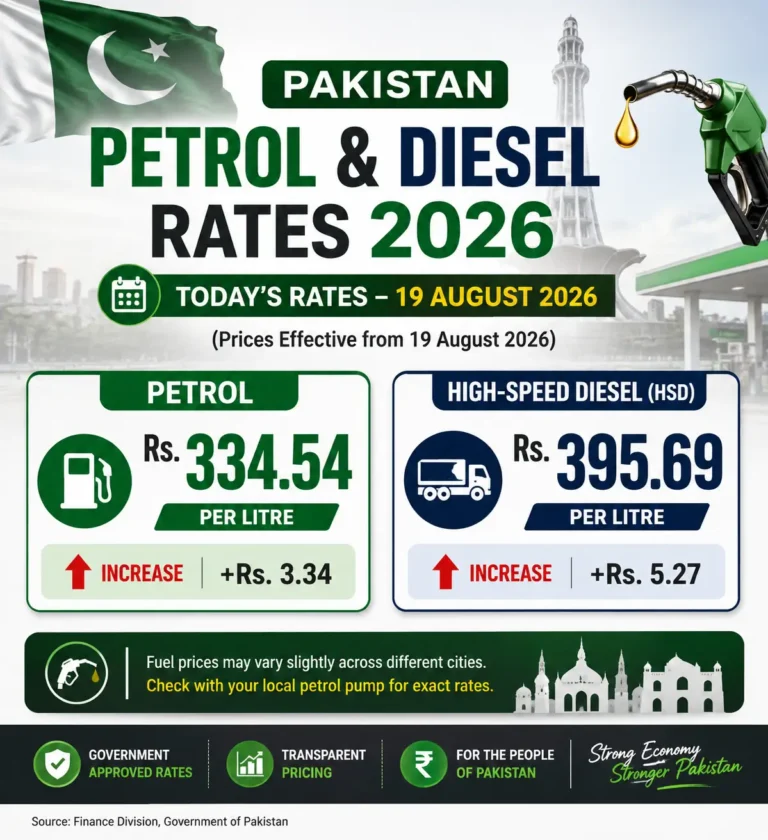
Before getting into what fuel prices mean for daily life, here’s where things stand as of the latest OGRA notification, effective 14 August 2026:
| FUEL | PRICE | MOVE |
|---|---|---|
| Petrol (Super) | Rs. 325.43 / L | ▲ Rs. 0.45 |
| High-Speed Diesel | Rs. 383.95 / L | ▲ Rs. 1.16 |
| Light Diesel | Rs. 199.98 / L | Unchanged |
| Kerosene Oil | Rs. 301.64 / L | Unchanged |
| LPG | Rs. 241.43 / kg | ▼ Rs. 67.33 |
| Jet Fuel (JP-1) | Rs. 238.87 / L | ▼ Rs. 56.97 |
The Commute
◆ ◆ ◆
Why Fuel Prices Now Change Almost Every Day
Here’s something most price trackers haven’t caught up to yet: as of August 2026, Pakistan has shifted away from the old fortnightly (every-15-days) revision cycle toward a Petrol Price and Diesel Price eum pricing mechanism, announced by the federal government. Instead of waiting two weeks for a single, sometimes-large adjustment, OGRA now reviews and can revise Petrol Price and Diesel Price every single day based on international crude movements and the exchange rate.
In theory, this should mean smaller, smoother price changes rather than the sharp jumps Pakistan has seen in past years. In practice, it also means anyone relying on an “updated every two weeks” price page is now working with outdated information far sooner than before — so daily-verified sources matter more than ever.
Also Read: https://petrolpricepakistan.online/petrol-vs-diesel-explained/
Petrol Price and Diesel Price in Pakistan – Current Fuel Prices
Petrol Price and Diesel Price in Pakistan are essential fuels used for transportation, agriculture, industry, generators, and everyday activities. Fuel prices can change because of international oil prices, currency exchange rates, import costs, and government pricing policies.
Petrol Price in Pakistan
Petrol, officially called Super Petrol or Motor Spirit, is what runs the overwhelming majority of Pakistan’s cars, motorcycles, and rickshaws. It typically carries an octane rating between 87 and 92 and is sold uniformly by every major company — PSO, Shell, Total PARCO, Attock, and Hascol — at the same OMCIA-notified rate. The petrol price is an important part of the Petrol Price and Diesel Price in Pakistan market and directly affects transportation costs.
Diesel Price in Pakistan
High-Speed Diesel (HSD) is the fuel that keeps much of Pakistan’s economy moving. Trucks, buses, tractors, trains, generators, and heavy machinery all use it. Because diesel is important for transport, agriculture, and industry, changes in diesel rates can affect freight charges and food prices.
Light Diesel Oil (LDO)
Light Diesel Oil rarely gets mentioned alongside Petrol and HSD, but it is an important product for slow-speed industrial engines, agricultural equipment, and tube wells, particularly in rural areas. LDO pricing moves with the same fuel revision cycle as the rest of the fuel basket and is usually priced below standard HSD.
High Octane (HOBC)
High Octane Blending Component, sold under names like PSO High Octane and Shell V-Power, carries an octane rating of 97 or higher. It is designed for turbocharged and high-performance engines that need higher compression ratios. HOBC rates can vary by brand and station.
Kerosene Oil
Kerosene remains a household fuel in many rural and off-grid areas, used for cooking, heating, and lighting where LPG or piped gas is not easily available. Its price moves independently of Petrol and Diesel, based on its own import mix and demand pattern.
LPG (Liquefied Petroleum Gas)
LPG serves a dual role in Pakistan. It is a cooking fuel for homes and small businesses without pipeline gas access, and in some regions it is also used as a vehicle fuel. Pricing is normally discussed per kilogram rather than per litre, and the practical cost to a household depends heavily on cylinder size.
| Cylinder Size | Typical Use | Approx. Cost |
|---|---|---|
| 11.8 kg | Domestic / household | ~Rs. 2,850 |
Petrol Price and Diesel Price Pakistan
The prices of Petrol Price and Diesel Price in Pakistan are important for consumers and businesses because fuel costs influence transportation, agriculture, logistics, manufacturing, and household expenses. Petrol is mainly used in cars and motorcycles, while diesel is widely used in commercial transport, tractors, generators, and heavy machinery.
◆ ◆ ◆
What a Fuel Hike Costs the Average Household
Take a typical motorcycle commuter riding roughly 30km a day for work, six days a week. At current Petrol rates, that’s close to Rs. 9,000–10,000 a month just in fuel — before food, rent, or anything else. A car owner covering the same distance in a small sedan is looking at nearly double that. The point isn’t the exact rupee figure; it’s that fuel has quietly become one of the top three household line items for a large share of Pakistan’s working population, right alongside groceries and utility bills.
◆ ◆ ◆
Motorcycle commuter
Estimated monthly fuel spend, 30km/day, 6
days/week
Small car commuter
Estimated monthly fuel spend, 30km/day, 6
days/week
◆ ◆ ◆
The Fare Chart
Why Your Rickshaw and Bus Fare Keeps Creeping Up
Public transport fares in Pakistan aren’t set purely by supply and demand — they track fuel costs closely, especially Diesel, which powers the intercity buses, vans, and freight trucks that move both people and goods. When Diesel climbs, transport unions and route associations typically push for fare revisions within weeks, not months. That’s why a Rs. 1–2 per litre Diesel increase can translate into a visible bump on your next bus ticket, even though the increase looks small on paper.
Rickshaws and taxis, which mostly run on Petrol or CNG, respond a little more slowly, but the same logic applies — drivers factor fuel cost directly into what they charge per kilometre, particularly during peak hours or on longer routes.
◆ ◆ ◆
How Petrol Prices Have Actually Moved Since 2018
Zooming out helps put today’s Rs. 325.43 in context. Pakistan’s Petrol price has moved through some dramatic swings over the past eight years, driven by currency crises, a global pandemic, the Ukraine war, and repeated IMF programme conditions:
◆ ◆ ◆
| Year | Petrol Price | Key Driver |
|---|---|---|
| 2018 | Rs. 95/L | Global oil rise, rupee depreciation |
| 2019 | Rs. 113/L | New IMF programme, currency devaluation |
| 2020 | Rs. 75/L | COVID-19 demand collapse, oil price crash |
| 2021 | Rs. 118/L | Post-COVID recovery, oil rebound |
| 2022 | Rs. 249/L | Ukraine war, IMF-linked subsidy removal |
| 2023 | Rs. 331/L | Historic peak amid currency crisis |
| 2024 | Rs. 270/L | Partial relief, exchange rate stability |
| 2025 | Rs. 403/L | Renewed global volatility, high import costs |
| 2026 (Aug) | Rs. 325/L | Current rate under daily pricing mechanism |
◆ ◆ ◆
“A one-rupee rise in Diesel doesn’t stay a one-rupee story — it moves through freight, fares, and food prices within a single billing cycle.”
The Farm Gate
◆ ◆ ◆
Diesel’s Quiet Grip on Food Prices
Long before produce reaches a city market, Diesel has already touched it three times over: once to run the tractor that ploughs the field, once to power the tube well that irrigates the crop, and once again for the truck that hauls the harvest to the wholesale market. A Diesel price increase therefore shows up on your dinner table weeks later, disguised as a slightly higher price for tomatoes, onions, or wheat flour — even though most shoppers never connect the two.
The Trade-Offs
◆ ◆ ◆
Small Changes That Actually Move the Needle
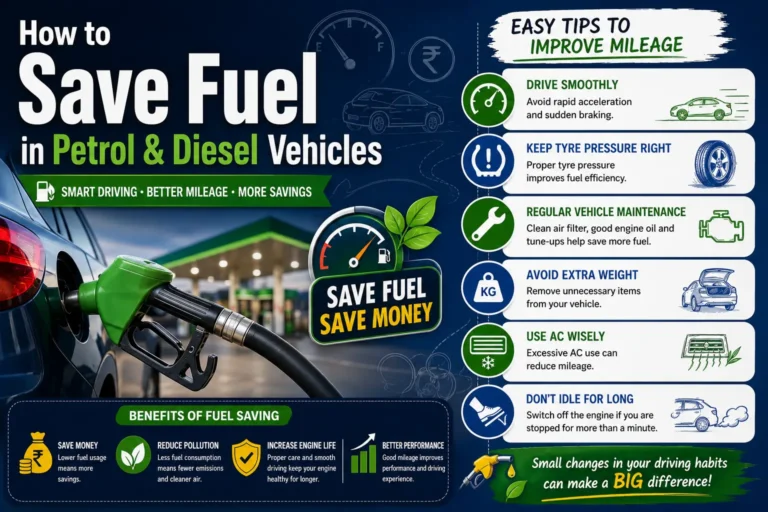
You can’t control the pump price, but you can control how much of it you’re exposed to every month:
What Comes Next
◆ ◆ ◆
Where Prices Are Headed From Here
Since Pakistan imports most of its crude and refined fuel, the next move inPetrol Price and Diesel Price pricing will largely come down to two things: international oil markets and the rupee’s exchange rate against the dollar. Add to that the petroleum levy, which the government leans on for revenue under its IMF commitments, and it becomes clear that pump prices are as much a fiscal story as an energy one. For now, expect continued fortnightly reviews, with any sharp global oil move likely to show up at Pakistani pumps within days.
Quick Answers
◆ ◆ ◆