Petrol vs Diesel Cars: Which One Should You Buy in 2026?
An up-to-date look at how petrol and diesel cars compare today, Petrol vs Diesel Cars so you can make a confident decision based on your budget, driving habits, and long-term plans.
The petrol-versus-diesel debate has been going on for years, but the answer in 2026 depends less on old assumptions and more on how you actually plan to use the car. Fuel prices, servicing networks, and vehicle technology have all shifted, and the right choice now comes down to a few practical questions: how far you drive each year, what you carry, and how long you plan to keep the car. This guide walks through the decision step by step.
Quick Verdict: Petrol vs Diesel
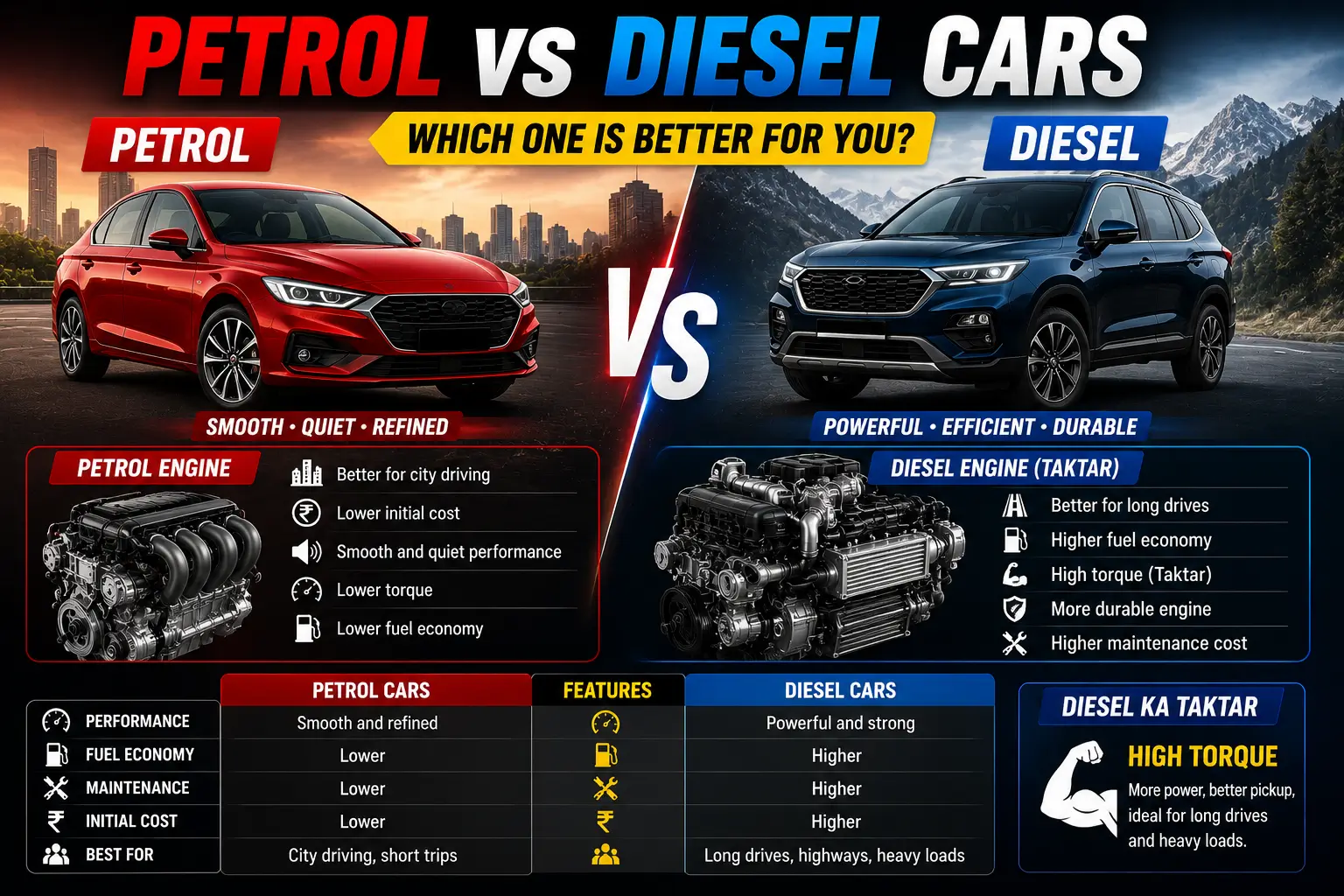
Choose Petrol If…
Choose Diesel If…
What’s Different About This Decision in 2026
A few things have shifted the balance compared to previous years. Diesel vehicles now come with more advanced emissions systems, which have improved their environmental profile but also added to their servicing complexity and cost. Petrol engines, meanwhile, have become more efficient thanks to turbocharging and smarter fuel management, narrowing the fuel-economy gap that diesel once held by a wide margin, particularly for everyday city driving. Petrol vs Diesel Cars Meanwhile, the price gap between petrol and diesel fuel itself continues to fluctuate with global oil markets and local taxation, so it’s worth checking current local prices before assuming either fuel is significantly cheaper.
6 Factors to Weigh Before You Decide
1
Your Annual Mileage
Diesel’s efficiency advantage grows the more highway kilometres you cover each year. Below a certain mileage, the extra upfront cost of a diesel vehicle can be hard to recover through fuel savings alone.
2
City vs Highway Driving Mix
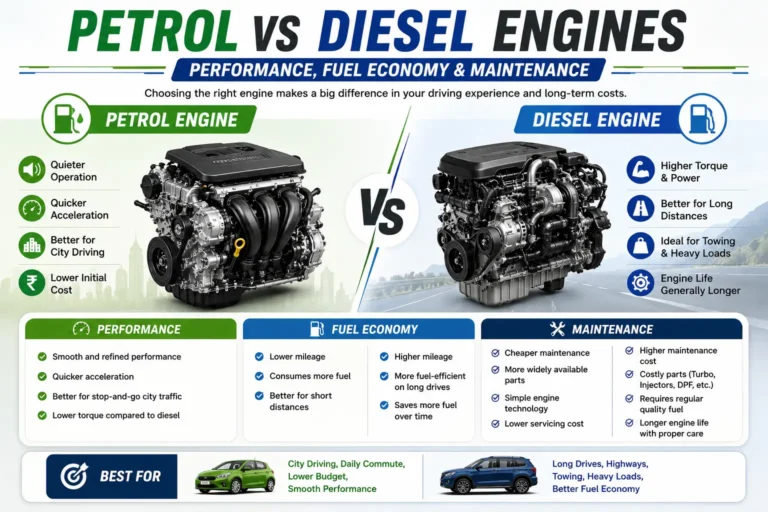
Petrol engines generally suit stop-and-go city traffic better, while diesel engines perform at their best on longer, steady-speed highway journeys.
3
Upfront Purchase Price
Diesel versions of most vehicles typically cost more to buy than their petrol counterparts, which needs to be factored into your total cost of ownership.
4
Servicing and Repair Costs
Diesel engines involve higher-pressure fuel systems and additional emissions equipment, both of which generally push maintenance costs higher than a comparable petrol engine.
5
Towing or Load-Carrying Needs
If you regularly tow a trailer, carry heavy cargo, or drive an SUV or pickup for work, diesel’s strong low-end torque is usually a practical advantage.
6
How Long You Plan to Keep the Petrol vs Diesel Cars
Diesel’s higher upfront cost is easier to justify if you plan to keep the vehicle for many years and rack up high mileage; for shorter ownership periods, Petrol vs Diesel Cars petrol is usually more cost-effective.
Practical tip: Before deciding, calculate your expected annual mileage and multiply it by the fuel price difference between petrol and diesel in your area. Compare that yearly saving against the extra upfront and servicing cost of the diesel version.
Also Read: https://petrolpricepakistan.online/
Resale Value and Petrol vs Diesel Cars Ownership
Resale value depends heavily on local market demand, and this can shift over time as buyer preferences change. In some regions, diesel vehicles hold their value well because of strong demand from buyers who cover high mileage, such as commercial users. In others, petrol vehicles are preferred due to lower running costs and broader buyer interest. Petrol vs Diesel Cars It’s worth checking recent resale trends for the specific make and model you’re considering, rather than relying on general assumptions about either fuel type.
Also Read: https://petrolpricepakistan.online/diesel-and-petrol-price/
Making the Final Call Petrol vs Diesel Cars
There is no single right answer for every buyer in 2026 — the better choice is the one that matches your actual driving pattern. Petrol vs Diesel Cars City-focused drivers with modest annual mileage will generally find petrol more economical overall, once purchase price and servicing are factored in. Drivers who cover long distances regularly, tow loads, or plan to keep their vehicle for the long haul will often find that diesel’s efficiency and durability pay off over time. Take a few minutes to honestly estimate your driving habits before choosing, and the decision becomes much clearer.
Also Read:https://petrolpricepakistan.online/petrol-diesel-price-trends/