How to Save Fuel in Petrol & Diesel Vehicles
How to Save Fuel in Petrol & Diesel Vehicles
Practical, easy-to-follow habits and maintenance tips that help petrol and diesel car owners cut fuel consumption, save money, and keep their engines running smoothly for longer.
Fuel prices rarely stay the same for long, and every rupee spent at the pump adds up over a month of daily driving. The good news is that fuel economy is not only about the type of car you own — it is heavily influenced by how the vehicle is maintained and How to Save Fuel it is driven. With a few consistent habits, most drivers can lower their fuel bills noticeably without spending anything extra, and in many cases while spending less on repairs too. Below is a complete, practical guide covering maintenance, driving behaviour, and the everyday choices that quietly drain fuel without most drivers noticing.
Why Fuel Economy Deserves Your Attention
A car that burns fuel inefficiently is usually also a car under stress — worn parts, dirty filters, and poor driving habits do not just cost more at the pump, they shorten the life of the engine, the tyres, and the transmission. Improving fuel economy is therefore not just a money-saving exercise; it is a form of preventive care that keeps a vehicle reliable for years. How to Save Fuel Small, consistent changes, applied together, typically produce a bigger saving than any single dramatic change.
12 Practical Tips to Improve Fuel Efficiency
Tip 01
Stay on top of regular servicing
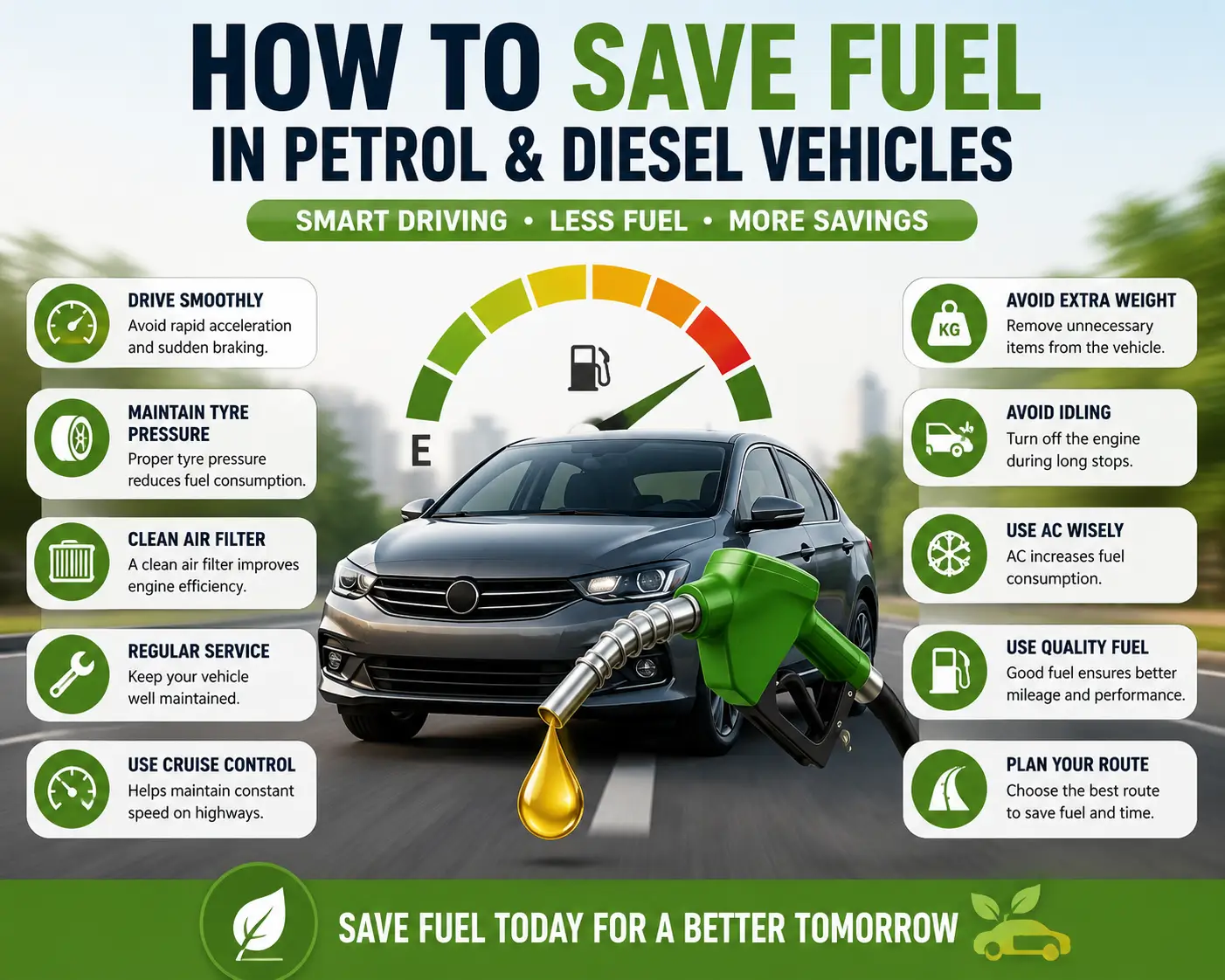
Just like any machine, a car performs best when it receives scheduled maintenance. Modern vehicles rely on sensors and onboard computers to manage fuel delivery, so a technician familiar with the latest diagnostic tools should check the engine at recommended intervals rather than waiting for a visible problem to appear.
Tip 02
Check tyre pressure often
Under-inflated tyres create more rolling resistance, forcing the engine to work harder to maintain speed. Even a modest drop in pressure can noticeably reduce mileage over time, so a monthly check with a proper gauge is one of the cheapest ways to protect fuel economy.
Tip 03
Replace worn engine components on schedule
Spark plugs, timing belts, hoses, and filters degrade gradually, and a worn part rarely announces itself with a warning light. Following the manufacturer’s replacement intervals,How to Save Fuel using a mechanic who understands current service standards, keeps combustion efficient and prevents small issues from becoming expensive ones.
Tip 04
Inspect and clean air filters
Air filters keep dust and debris out of the combustion chamber. A clogged filter restricts airflow, which upsets the air-fuel ratio and forces the engine to burn more fuel for the same performance. Checking the filter at every service, and more often in dusty conditions, keeps combustion clean.
Tip 05
Watch out for dusty or unpaved roads
Frequent driving on dirt roads or in stop-and-go traffic accelerates dirt build-up in the air intake. Drivers who regularly travel on unpaved routes should inspect their air filter more often than the standard schedule suggests.
Tip 06
Ease off highway speed
Aerodynamic drag increases sharply at higher speeds. Reducing cruising speed on the highway by even a small margin can improve fuel economy by a meaningful percentage, making it one of the simplest behavioural changes a driver can make.
Tip 07
Accelerate and brake gently
Sudden acceleration and hard braking waste far more fuel than smooth, gradual inputs. Anticipating traffic flow and easing onto the accelerator, rather than flooring it, can meaningfully cut consumption over a full tank.
Tip 08
Plan your trips ahead of time
Starting, stopping, and idling in traffic are among the least efficient things an engine does. Planning routes in advance, combining errands into a single trip, and avoiding peak-hour congestion where possible all reduce unnecessary fuel burn.
Tip 09
Travel light
Extra weight in the boot or cabin means the engine has to work harder to move the vehicle, which increases fuel demand. Removing items that are not regularly needed — roof boxes, unused equipment, or excess cargo — is an easy way to lighten the load.
Tip 10
Shift gears earlier (manual transmissions)
Drivers of manual vehicles can save fuel by shifting into a higher gear as soon as it is safe, rather than letting the engine climb to high RPM before changing. Lower revs at cruising speed generally mean lower fuel consumption.
Tip 11
Avoid unnecessary idling
Leaving the engine running while parked or waiting burns fuel for zero distance travelled. If a stop is expected to last more than a minute or so, switching off the engine is usually the more efficient choice.
Tip 12
Use the manufacturer-recommended fuel and oil grade
Using the fuel octane and engine oil grade specified by the manufacturer keeps the engine running as it was designed to. Lower-grade substitutes or the wrong oil viscosity can quietly reduce efficiency and increase wear over time.
Quick takeaway: Most of the biggest fuel savings come from combining just three habits — smooth driving, correct tyre pressure, and timely servicing. How to Save Fuel None of them cost extra; they simply require consistency.
Also Read: https://petrolpricepakistan.online/
How to Save Fuel & Diesel Prices to Rise or Fall?
Fuel-saving habits matter more when prices are unpredictable, and pump prices rarely move for a single reason. Understanding the forces behind price changes helps drivers make sense of the numbers they see each month.
Also Read:https://petrolpricepakistan.online/petrol-diesel-price-trends/
Global crude oil prices
Petrol and diesel are refined from crude oil, so the international price of crude — set largely by global supply and demand — is usually the single biggest factor behind local fuel prices. Decisions by major oil-producing nations and alliances about how much crude to pump directly influence How to Save Fuel much is available on the world market.
Currency exchange rates
Crude oil is typically traded and paid for in US dollars. In countries that import their fuel, a weaker local currency against the dollar makes the same barrel of oil more expensive to buy, even if the international crude price has not changed at all.
Refining and How to Save Fuel transportation costs
Turning crude oil into usable petrol or diesel involves refining, storage, and transportation, each of which adds cost. Disruptions such as refinery maintenance shutdowns, How to Save Fuel shipping delays, or damage from natural disasters can tighten supply and push prices upward.
Government taxes and duties
A significant portion of the price paid at the pump usually goes toward government levies, fuel duties, and other taxes. Because these are set by policy rather than the market, they can change fuel prices independently of what is happening internationally.
How to Save Fuel Local demand and seasonal patterns
Demand for fuel is not constant throughout the year. Periods of higher travel, harvest seasons that increase diesel use for machinery, or holiday travel spikes can all push local prices up temporarily, How to Save Fuel even without any change in the global market.
Also Read: https://petrolpricepakistan.online/diesel-and-petrol-price/
Geopolitical events
Conflicts, sanctions, or political instability in major oil-producing regions can disrupt supply chains and create uncertainty in the market, often causing prices to rise quickly even before any actual shortage occurs, simply because markets price in the risk.